Flood watch, flood warning, flash flood warning: what each one means
A flood watch means conditions are favourable for flooding, and it may not happen. A flood warning means flooding is happening or about to. A flash flood warning means the same, for a flood that rises within hours of the rain. The National Weather Service labels them in plain words: a watch says "Be Prepared", a warning says "Take Action!"
Flood or flash flood?
The National Weather Service (NWS) defines a flood as water overflowing onto normally dry land, often from a river, stream or drainage ditch that has risen.
A flash flood is defined by its speed. NWS describes it as flooding that begins within six hours, and often within three, of the heavy rain or other cause, such as a dam or levee failure. That short gap is why flash floods get alerts of their own: the water can arrive while the storm that caused it is still overhead.
The flood alerts, from least to most urgent
NWS gives each of its flood alerts a short instruction, set out on its flood watch and warning page:
- A flood advisory, "Be Aware". A weather event is expected that may become a nuisance.
- A flood watch, "Be Prepared". Conditions are favourable for flooding. A flash flood watch is the same idea for flash flooding, and NWS notes it usually covers several counties.
- A flood warning, "Take Action!" Flooding is imminent or already happening.
- A flash flood warning, "Take Action!" A flash flood is imminent or already happening.
The step from watch to warning is a change in what you are being asked to do. Our piece on watches, warnings and advisories goes through that pattern across every kind of hazard, and flooding follows it closely. The one difference is time. A flash flood can develop too fast for a watch to come first, so a warning may be the first alert anyone gets.
The rarest one: a flash flood emergency
Above the warning sits the flash flood emergency. NWS keeps it for exceedingly rare situations where extremely heavy rain is creating a severe threat to life and catastrophic damage from a flash flood is happening or will happen soon.
Flooding far from the storm
The rain that causes a flood does not have to come from a storm overhead. In late September 2026, the NWS Weather Prediction Center tied a risk of considerable flash flooding in New Mexico and western Texas to tropical moisture from Hurricane Polo, a storm far off Mexico's Pacific coast. Our post on reading a hurricane cone covers why that happens. The flood alerts for your own area are what tell you whether it reaches you.
What NWS says about flood water
The NWS Turn Around Don't Drown campaign is mostly about roads. It notes that over half of all flood-related drownings happen when a vehicle is driven into hazardous flood water. It takes 12 inches (30 cm) of rushing water to carry away most cars and 2 feet (60 cm) to carry away SUVs and trucks, and 6 inches (15 cm) of fast-moving water can knock over an adult. NWS also advises never driving around barriers on a flooded road, because the road beneath the water may have collapsed.
Where Ora Weather fits
Ora Weather shows severe weather alerts on both tiers and follows the official NWS classifications, so a flood watch or flash flood warning appears under the name NWS gave it, with what is happening, what to do and when it ends, and an all-clear afterwards. Its minute-by-minute rain graph shows the first 15 minutes on the free tier and the full hour on OraPlus, and radar looks two hours ahead on free and up to twelve on OraPlus.
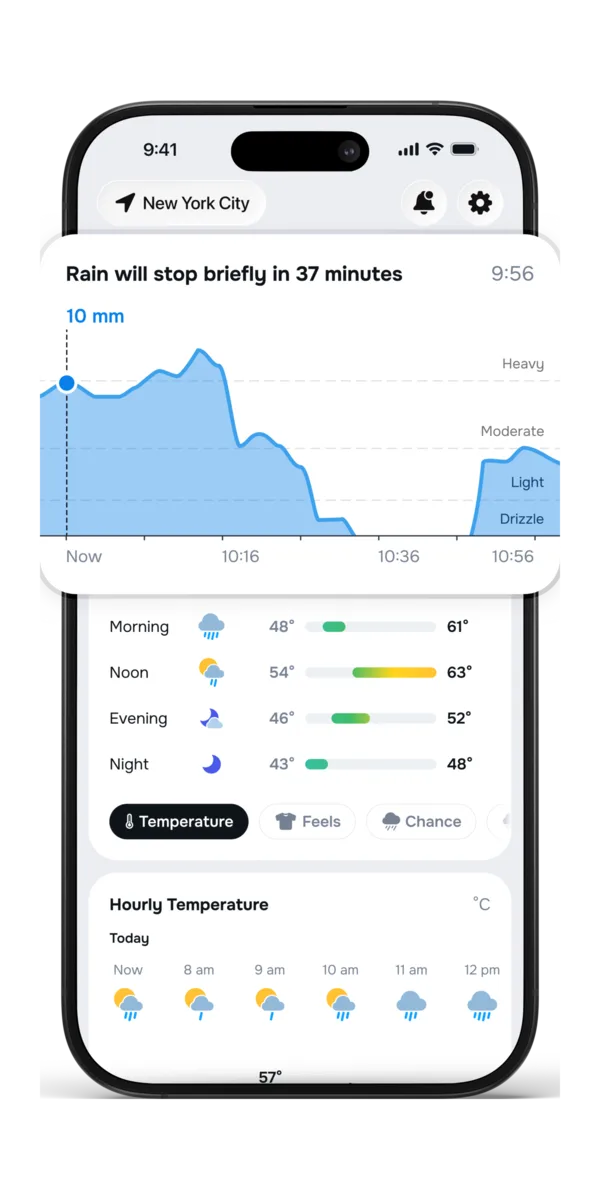
Radar and a rain graph show rain falling, not water already on the ground or running down a valley from somewhere else. For that, the flood alert is the source.
Common questions
- What is the difference between a flood warning and a flash flood warning?
- Both mean flooding is happening or imminent, and the National Weather Service labels both "Take Action!" The difference is speed. A flash flood begins within six hours of the heavy rain or other cause, and often within three, so a flash flood warning usually comes with much less notice.
- Does a flood watch mean it will flood?
- No. The National Weather Service issues a flood watch when conditions are favourable for flooding. It may not happen. A watch usually covers a broad area, often several counties.
- What is a flood advisory?
- It is the lowest of the flood alerts. The NWS issues one when a specific weather event is forecast that may become a nuisance, and labels it "Be Aware".
- What is a flash flood emergency?
- The most serious flood alert the National Weather Service issues. It is reserved for exceedingly rare situations where extremely heavy rain is causing a severe threat to life and catastrophic damage from a flash flood is happening or will happen soon.
- Can a flash flood warning come without a watch first?
- Yes. Flash floods can develop too fast for a watch to come first, so a warning can be the first alert you get.